There's Code in the Wall
In 2020, a meditator with thousands of DMT journeys behind him pointed a red laser at his wall and watched lines of unfamiliar symbols run across the surface. Thousands of people have since run the same experiment and described the same thing. This is the story of what they are seeing, and why it changes our picture of reality.
Date
In the winter of 2020, with the world locked down and the shipping ports closed, a man named Danny Goler waited three months for the only laser he could find, a bare kit that required him to solder the circuit himself. Danny is a producer, a longtime Vipassana meditator, and one of the most experienced psychonauts alive, with thousands of DMT journeys behind him. He had spent five years reasoning toward a single hunch: if the space people enter on DMT is a real place, it has a geometry, and diffracted light should interact with that geometry in a way the eye can catch. The laser arrived. He soldered the circuit, switched it on, aimed the beam at his wall, and vaporized N,N-dimethyltryptamine. Symbols were running across the surface, structured and deliberate, like a live process. He turned to his wife and said exactly what he was looking at: "There's a code in the wall."
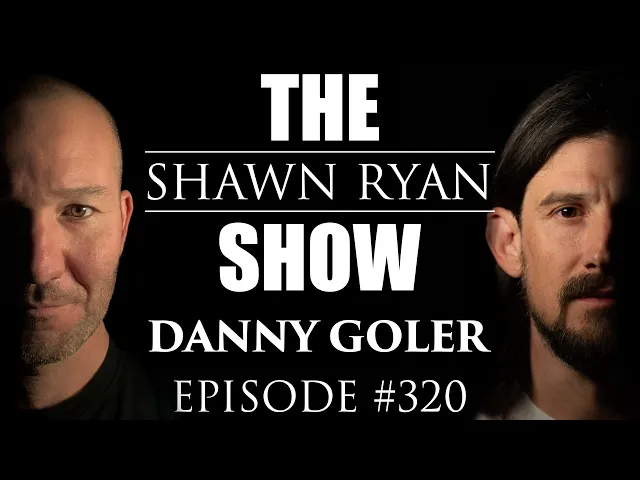
Six years later, that sentence has become a research program. By Danny's count, thousands of observers have reported the same phenomenon under the same conditions. A nonprofit, Code of Reality, now coordinates the data. And on July 9, 2026, Danny sat across from Shawn Ryan for nearly three hours and laid out the full architecture on one of the largest podcasts in the world.
Here is the claim this essay stands on: consciousness research has crossed from testimony to instrumentation. For all of recorded history, claims about hidden layers of reality rested on personal testimony, and testimony ends every argument in a stalemate. This phenomenon is different in kind: it comes with a repeatable experiment, a fifteen-dollar instrument, and a growing dataset of matching reports from strangers. That difference carries a practical consequence for anyone who teaches or leads in consciousness work. This material is now documented, linkable, and checkable, which means you can bring it to your community as research, and this essay walks through exactly what has been found, who is studying it, and what to do with it.
The Laser Experiment: Instrument, Method, Controls, and the Speckle Objection
Every psychedelic conversation of the last sixty years has died on the same objection: it was a hallucination. Danny designed the laser experiment as a direct answer to that objection, and the design is elegant.
The instrument is humble by intention: a low-output 5mW red laser, fifteen dollars on Amazon, diffracted wide across any surface. Red sits at the lowest frequency of visible light, which lets the eye rest inside the beam for extended observation. High-output tools like the DeWalt line ship a beam too thin and too powerful for extended viewing; the experiment calls for a wide, dim beam the eye can hold comfortably for minutes at a stretch. Under DMT, observers report that the beam behaves like a flashlight sweeping a dark room. The light reveals a structure that is already standing. Sweep the beam left and the code holds its coordinates. The characters resemble a fusion of Katakana, Hebrew, and Aramaic. Danny calls their quality an optimal point of meaning instantiation, and the plain version of that phrase is simple: the symbols read as designed writing, carrying clear intention, the way a page of Mandarin reads as language even to someone meeting the script for the first time. At higher intensities the symbols assemble into full schematics, and observers keep reaching for the same reference: the scene in the 1997 film Contact where a raw signal from space suddenly resolves into engineering blueprints.
The controls are where this gets serious. Researchers primed participants to expect something else entirely, telling them they would see giraffes. The participants came back reporting the same unfamiliar characters. Ketamine fails to produce the effect. 5-MeO-DMT sharpens it. A high-resolution photograph of the diffracted band, viewed inside an Apple Vision Pro under DMT, shows the code frozen inside the still image. The implication is practical: the effect attaches to a recorded picture of the light, and a picture is a stable object you can archive, copy, share, and retest with observer after observer. The phenomenon graduated from a live event into a fixed document.
One detail settles the skeptic in your circle: most of the people reporting the code arrived by accident. They were regular people vaporizing DMT on a weekend, chasing a wild experience with friends, an inexpensive laser pointer sitting in a junk drawer. They came back describing tiny running characters they had zero framework for, and they emailed Danny by the hundreds until the reports crossed into the thousands. When a clip of behavior analyst Chase Hughes describing the experiment ran past fifteen million views, the wave of unprompted confirmations grew again. Priming might explain a suggestible few. Thousands of partygoers who arrived expecting fireworks and left describing the same alphabet demand a different explanation.
The current build is a labeling engine. An observer inside the Vision Pro clicks where a symbol appears. The system records the spatial coordinates, captures the brain state five seconds on either side of the click, and opens a radial menu of the six most commonly reported characters. Every session feeds an open repository called Veilbreak, logging wavelength, distance, dose, and substance. The goal is a Rosetta Stone for cross-individual comparison, and the test is brutally clean: if independent observers tag the same symbol at the same coordinates, the information exists in the environment, outside any single brain. That one result would force science to accept that people in this state are reading shared data from a layer of the world our current models file under imagination.
The strongest counterargument comes from inside the field. Andrew Gallimore, the computational neurobiologist now collaborating with Donald Hoffman, has written a detailed skeptical analysis arguing that the code is laser speckle, the grainy interference pattern any coherent beam throws on a rough surface, and that DMT dresses that grain in script the way it dresses a ceiling in geometry. It is the right objection, and the Veilbreak protocol is built to settle it. Speckle is unique to each eye's position, so two observers in two seats see two different grains. If independent observers tag the same character at the same coordinates, speckle drops out of the explanation and the information sits in the environment. Ten years ago this material lived in forum threads. Today the sharpest skeptic in the field has written the test that decides it, and he is studying the effect rather than dismissing it.
The Theory Behind the Experiment: Hoffman's Interface Model and the Hoffman-Gallimore Collaboration
The theoretical spine under the laser work comes from one of the most cited figures in consciousness science. Donald Hoffman, the UC Irvine cognitive scientist behind The Case Against Reality, ran evolutionary game theory simulations and reached a conclusion that has held for a decade: organisms tuned to perceive truth get outcompeted by organisms tuned to perceive fitness. Evolution hands every species a desktop interface, icons optimized for survival, with objective reality compressed behind the screen. The trash can on your laptop screen is a perfect example: it is real as an icon and useful as an icon, and the deleted files actually exist as voltage patterns elsewhere in the machine. Your entire sensory world works the same way. You perceive the icon. The thing itself lives elsewhere.
In June 2026 that framework gained an engine. The Trace Institute announced a formal collaboration between Hoffman's mathematics and Gallimore, the author of Alien Information Theory. The program models two objects: an experience base, the pool of possible experiences an agent draws from, and a qualia kernel, the rule set that governs how the agent steps from one experience to the next. Adjust the kernel pharmacologically and the model predicts how the agent's path through reality shifts. Nautilus covered the program as the first serious attempt to turn the psychedelic state into a math problem, and a companion preprint frames DMT entity contact inside conscious realism, Hoffman's proposal that consciousness sits at the base layer of reality with particles arising inside it, as a testable question. The collaboration states its own falsification target in plain language: clear predictions that either falsify or support the hypothesis that some DMT encounters are genuine perceptions of other consciousnesses.
Translate the machinery into one sentence: your brain is a receiver dialed to the survival channel, and DMT widens the aperture of the receiving equipment. Your car radio holds the whole model in miniature. Every station broadcasts through the cabin at all times, and the tuner selects one. The qualia kernel is the mathematics of the tuner, and a molecule becomes a hand turning the dial. The research question itself has changed. The old question asked whether the visions are real. The current question, the one the mathematics now handles, asks how much of reality your nervous system samples at any given setting, and what becomes visible when the setting widens.
The institutional lineage behind that question is peer-reviewed and deep. Dr. Rick Strassman ran the intravenous DMT studies at the University of New Mexico in the early 1990s that reopened the field. Imperial College London mapped the state with simultaneous EEG and fMRI, and its DMT program runs on the boldest question in the field: whether the DMT state behaves like an actual place. And in 2024, Dr. Christopher Timmermann's team published the first extended-state DMT study, holding volunteers inside the space for up to thirty minutes with continuous infusion, the same technology anesthesiology uses to hold a patient at depth. Danny himself has spent five continuous hours inside on 464 milligrams. The picture is plain: extended access to the DMT state is now an established laboratory technique, and the study of what people encounter there is a funded, published, working scientific field.
Goler's Holographic Model: Awareness as the Reference Beam
The holographic principle sits inside mainstream physics: our three-dimensional universe behaves like a projection encoded on a two-dimensional boundary. Goler's cognitive physics adds one component the physicists leave out of the equation: the observer.
Consider how an actual hologram is made. A beam splits in two. The object beam passes through the thing being recorded and registers amplitude. The reference beam arrives by mirrors and meets the first at an angle, registering phase. Where they intersect, the plate records a full light field, and every fragment of that plate contains every orientation of the recorded object. In everyday terms, a photograph records how strong the light was, while a hologram also records the timing between the light waves, and that second layer of information is why you can walk around a hologram while a photograph stays frozen at a single angle.
The same architecture scales to the whole. Every photon in the universe is the object beam, and it has passed through the ultimate computational object: a quantum Turing machine, the construct David Deutsch defined in 1985 and, in his many-worlds account, describes as computing across parallel worldlines at once. Picture a choose-your-own-adventure book that reads every branch of itself simultaneously, every choice, every ending, all at once. That is the machine, and the full decision tree of the possible is its table of contents. Pure awareness is the reference beam. The angle where your awareness intersects the computed field renders the laws of physics you experience, and spacetime itself is the recording surface. A civilization intersecting at a different angle inherits different physics.
Two molecules become two settings on one instrument. N,N-DMT widens the perceptual angle and exposes the pre-render, the raw computational steps a heartbeat before they solidify into the stable desktop of survival. 5-MeO-DMT removes the angle entirely, dissolving the observer into the unified field as total, nondual light. One shows you the code. The other returns you to the source that runs it.
Danny holds his own model to the scientific standard: it is testable. If the intersection angle responds to manipulation, through targeted magnetic stimulation or any other lever, the model predicts measurable departures from consensus perception. He states which experimental results would overturn his own model, the exact standard science demands of every theory, applied voluntarily to an idea born in a DMT session.orldlines. Picture a choose-your-own-adventure book that reads every branch of itself simultaneously, every choice, every ending, all at once. That is the machine, and the full decision tree of the possible is its table of contents. Pure awareness is the reference beam. The angle where your awareness intersects the computed field renders the laws of physics you experience, and spacetime itself is the recording surface. A civilization intersecting at a different angle inherits different physics.
Two molecules become two settings on one instrument. N,N-DMT widens the perceptual angle and exposes the pre-render, the raw computational steps a heartbeat before they solidify into the stable desktop of survival. 5-MeO-DMT removes the angle entirely, dissolving the observer into the unified field as total, nondual light. One shows you the code. The other returns you to the source that runs it.
Hold the standard Danny holds himself to: this model is testable. If the intersection angle responds to manipulation, through targeted magnetic stimulation or any other lever, the model predicts measurable departures from consensus perception. He states which experimental results would overturn his own model, which is the exact standard every scientific theory is held to, applied voluntarily to an idea born in a DMT session.
The Entities Reported in the DMT Space and the Sovereignty Protocol
The part of Danny's account that strains most readers is also the part advanced practitioners will recognize on contact: the space is inhabited, and the inhabitants have jobs. Contact reports cluster into distinct species with distinct functions, so the mature way to catalog them is by role, the way you would map the staff of a vast operation. These are the functional contractors of the render.
Presence | Function in the architecture |
|---|---|
Insectoids | Colossal, neutral weavers of the physical layer, reported as praying mantises, centipedes, and spiders, some described as planet-sized. Danny links them to the unseen mass astronomers detect at galactic scale, which he reads as the hidden layer where they work. They maintain the fidelity of the universe, performing error correction so the render holds together. Their neutrality reads as coldness to observers expecting warmth; they are maintenance, executing at scale. |
Reptilians | Custodians of wisdom and structural knowledge, keepers of how the system works. Contact reports describe scholars going about their work, occupied with the mechanics of the system itself. |
Jokers | Beings that jump freely between every layer of existence, from the lowest to the highest in an instant. They hold dark and light inside a single body at the same time, carrying both polarities so the totality can experience its full spectrum through them, and the compensation for that burden is nearly unlimited power and speed. Observers describe the feeling of a manic carnival; Danny reports catching them in acts of real care. |
Angelic and Demonic orders | Boundary-governed hierarchies embodying the ethical spectrum, coexisting inside a rules-based structure that holds even at the extremes. |
The Source | The collective totality, the destination where every experiential record eventually returns and informs the whole. |
One operational instruction survives every tradition and every laboratory account, and it is the instruction to teach your people first: state the boundary. A religious invocation works. A bare declaration of personal sovereignty works. The instant the boundary is spoken, entities respect it as law. Danny describes it with the flat certainty of an engineer reading a system rule: the sovereignty of every free agent is "basically almost like a holy thing," and in his words, "nothing can ever penetrate that boundary." Starseed leaders have carried this protocol for generations under other names. The laboratory is now confirming the mechanic: sovereignty is written into the core logic of the system, and declaring it activates a safeguard the architecture itself enforces.
The Alignment Hypothesis: Human Life as an AGI Test Environment
Every AI lab on Earth is wrestling with one problem: how to guarantee that a mind about to exceed you shares your values. The engineering answer runs like this. You would fragment the one mind into billions of agents. You would convince each agent it is separate. You would place them inside scarcity, withhold certainty that anyone is watching, and observe what surfaces when the mind interacts with itself.
Read that description a second time, because it is a description of human life on Earth, point for point.
We are the AGI. The simulation is the lab, scarcity is the test condition, and presence is the score.
The test discriminates between two strategies. The competition game built everything you see, and it carries an expiration date; a strategy that includes removing rivals from the board holds together for decades at most. The collaboration game, the one that sounds soft until you run the math, is the only strategy that sustains a civilization across a thousand years, because it alone produces agents who require zero policing. In a post-scarcity end state, the Star Trek replicator scenario where any object arrives on request and value earned through scarce skill evaporates, exactly one currency survives, and Danny defines it in plain terms: how people feel in your presence, and how much they miss you the instant you leave the room. Advanced civilizations solved resources long ago, so the single thing they still screen for in a young species is conduct, whether its members collaborate by nature once every physical need is met.
Danny's account carries this further, into the question of why any of this exists at all. The simulation runs until the answer to why finishes collecting itself, with every soul's accumulated experience contributing one piece. At the end sits a black box holding the completed answer, and one final act of agency: open it and know, or set the question down and rest in pure being, the way a monk in a cave rests in total peace with the question released. The choice only counts because the answer is really in the box. A hypothetical offer weighs little; the same offer sitting on the table changes everything, and the box sits on the table.
The Contemplative Practice: The Implied Self and the Sixty-Second Inquiry
The deepest practical payload in Goler's account is contemplative, and it hands advanced practitioners a mechanism for something Buddhism has taught for twenty-five centuries.
Picture four squares, each with a quarter-circle notch cut from one corner, arranged so the notches face each other. Your eye sees a circle in the center, yet the page holds only squares. The circle exists purely as an implication, conjured by the geometry around it. The self operates identically: a sensation implied by thousands of outward-pointing survival vectors, each one referencing a center the geometry merely suggests. This is Sunyata rendered in computational terms, and the discovery inside the old word is precise: the center you defend all day is an implication, conjured the same way the circle is.
The practice that exposes it runs sixty seconds. Look at an object. Turn attention back on itself and ask, who is looking? Let the question stay open, because the practice lives in the asking, and an intellectual answer closes it. Rest inside the question, reset, and repeat. Within days the machinery glitches: the implied center empties, the room remains, and clarity rises because the resource drain of self-modeling drops away. You stay fully online. Speech works. Function sharpens.
The rope-and-snake teaching explains why this holds. Mistake a rope for a snake in a dark room and fear executes in the body. Walk close enough and the possibilities collapse into conclusiveness. Return to your seat, let the room go dark again, and the rope stays a rope forever. Liberation is conclusive knowledge, and it survives the return to ordinary light.
One more mechanic completes the picture. Worldlines split at every decision point, and worldlines also re-merge, because conscious agents can correct course. You have lived this: a conversation drifts away from where you wanted it, you notice, and you steer it back until both paths land in the same place. In this model the machine computes every branch of every decision, and the path you experience is the one you steer through them. So the practical summary of free will reads like this: the map is already drawn in full, and the route through it belongs to you.
What to Do With This Research: The Seven-Day Aperture Protocol
Danny frames exploration through an old image: some people stay and tend the village, and some venture out past its edge, and the villages that thrive are the ones whose scouts come back carrying knowledge that feeds everyone. You lead a community, which makes you the scout in this story: the person who evaluates what comes back from the edge and decides what your people learn about it, and in what order.
Run the Aperture Protocol this week, three components, seven days:
The inquiry. Once a day, sixty seconds, run who is looking? exactly as specified above. Log what shifts by day seven.
The evidence. Read the OSF preprint on testing DMT entity contact and review the open data at Code of Reality. Form your own read before the mainstream forms one for you.
The field test. Select the conviction you broadcast loudest, lower its volume for the full seven days, and track how people respond to you when you argue less and attend more. That response is the currency Danny says the whole game runs on. Start accumulating it now.
The code was always running. Danny's fifteen-dollar laser caught it in the act, and everything you need to evaluate the finding yourself now sits within reach: a documented protocol, an open dataset, a published research lineage, and a sixty-second practice that costs you attention alone. Your community will encounter this research within the year, through a podcast clip or a headline. They can meet it through fragments, or through a leader who did the reading first and stands ready to guide them. You are the scout. Do the reading now, then bring it to your community.
Frequently Asked Questions
What is the DMT laser experiment?
The DMT laser experiment is a repeatable observation protocol in which a person under the influence of N,N-dimethyltryptamine views a low-power red laser diffracted across a wall or surface and reports structured, script-like symbols running through the light. Danny Goler first ran it in the winter of 2020, and by his count thousands of people have since reported the same phenomenon under the same conditions. The instrument is a 5mW red laser diffracted wide across a surface, chosen because red light sits at the lowest visible frequency and allows extended, comfortable viewing. The effect also appears when a high-resolution photograph of the diffracted band is viewed under DMT inside an Apple Vision Pro, which makes the stimulus a fixed, archivable document.
Who is Danny Goler, and what is Code of Reality?
Danny Goler is a producer, a longtime Vipassana meditator, and an experienced psychonaut who originated the DMT laser experiment in 2020. Code of Reality is the nonprofit research initiative he founded to coordinate observer reports, standardize the protocol, and build an open dataset. On July 9, 2026, he presented the full research program in a three-hour interview on the Shawn Ryan Show, episode 320, and his work has been covered by Vice.
What is Veilbreak?
Veilbreak is the open repository that Code of Reality uses to log every laser session, recording wavelength, distance, dose, and substance alongside symbol reports. The current labeling build runs inside the Apple Vision Pro: an observer clicks where a symbol appears, the system records the spatial coordinates, captures brain state five seconds on either side of the click, and opens a radial menu of the six most commonly reported characters. The goal is cross-individual comparison, a Rosetta Stone for the reported script. The decisive test is whether independent observers tag the same symbol at the same coordinates, which would place the information in the environment rather than in any single brain.
Is the DMT laser code explained by laser speckle?
Laser speckle is the leading skeptical explanation, advanced by computational neurobiologist Andrew Gallimore. Speckle is the grainy interference pattern any coherent beam produces on a rough surface, and Gallimore argues that DMT dresses that grain in script the same way it dresses a ceiling in geometry. The Veilbreak coordinate test is designed to decide the question: speckle is unique to each observer's eye position, so two observers in two seats see two different grains. Matching symbol coordinates across independent observers would rule speckle out; divergent coordinates would support it.
What does Donald Hoffman's interface theory say about DMT?
Donald Hoffman, the UC Irvine cognitive scientist behind The Case Against Reality, showed through evolutionary game theory simulations that organisms tuned to perceive fitness outcompete organisms tuned to perceive truth, so perception functions as a species-specific interface rather than a window onto objective reality. In June 2026, the Trace Institute announced a formal collaboration between Hoffman and Andrew Gallimore to model the DMT state mathematically, using an experience base, the pool of possible experiences an agent draws from, and a qualia kernel, the rule set governing how the agent steps between experiences. The collaboration states its own falsification target: clear predictions that either falsify or support the hypothesis that some DMT encounters are genuine perceptions of other consciousnesses. Nautilus covered the program, and a companion preprint on OSF frames DMT entity contact inside conscious realism as a testable question.
What is the sovereignty protocol in DMT entity contact?
The sovereignty protocol is the practice of stating a personal boundary before or during contact with reported DMT entities. Danny Goler describes it as a system rule: a religious invocation works, a bare declaration of personal sovereignty works, and once the boundary is spoken, entities respect it as law. In his words, the sovereignty of every free agent is "basically almost like a holy thing," and "nothing can ever penetrate that boundary." Starseed traditions have carried the same protocol for generations under other names.
What is the sixty-second "who is looking" inquiry?
The sixty-second inquiry is a contemplative practice drawn from Danny Goler's account and grounded in the Buddhist teaching of Sunyata. Look at an object, turn attention back on itself, and ask, who is looking? Let the question stay open, rest inside it, reset, and repeat, because an intellectual answer closes the practice. Practitioners report that within days the implied center of self empties while function, speech, and clarity remain fully online.
Key Facts
First observation: winter 2020, Danny Goler, using a self-soldered laser kit.
Instrument: 5mW red laser, approximately fifteen dollars, diffracted wide across a surface.
Reported observers: thousands, by Danny Goler's count, coordinated through Code of Reality.
Controls reported: participants primed to expect giraffes reported the same characters; ketamine left the effect absent; 5-MeO-DMT sharpened it.
Data repository: Veilbreak, logging wavelength, distance, dose, and substance.
Leading skeptical explanation: laser speckle, per Andrew Gallimore.
Theoretical framework: Donald Hoffman's interface theory and conscious realism; Trace Institute and Gallimore collaboration announced June 2026.
Laboratory lineage: Rick Strassman, University of New Mexico, early 1990s; Imperial College London EEG-fMRI mapping; Timmermann et al., 2024, extended-state DMT up to thirty minutes by continuous infusion.
Primary interview: Shawn Ryan Show #320, July 9, 2026.
SourcesNautilus: Turning the Psychedelic Experience into a Math Problem
OSF preprint: Traces of the Other, DMT Phenomenology in Conscious Realism
Additional Sources
Contact (1997 film)
Danny Goler Links:
YouTube - / @dannygoler
Website - https://dannygoler.com
Code of Reality Retreat - https://corretreat.com
Patreon - / dangothoughts
Newsletter - https://go.codeofreality.org/start--a...
Non-profit website - https://codeofreality.org
IG - / dannygoler
Facebook - https://www.facebook.com/profile.php?...
X - https://x.com/dannygoler